
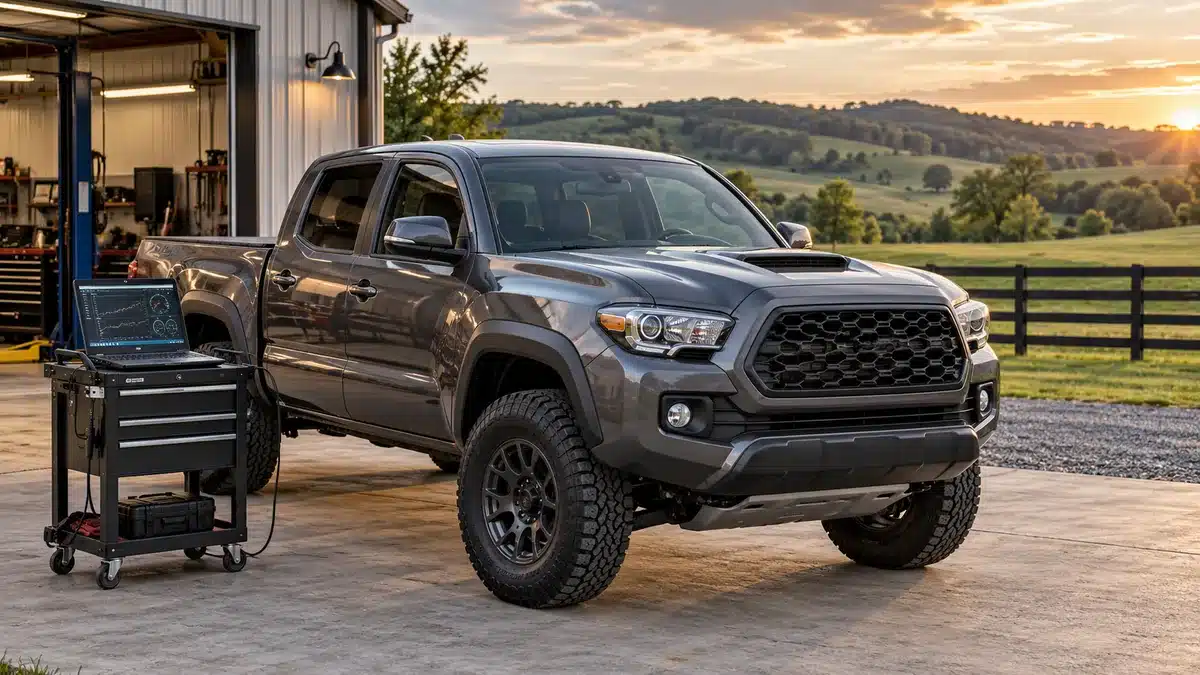
Your Tacoma should not need a running start to merge. Your 4Runner should not bounce between gears on every grade. And your Tundra should not feel confused when you hook up a trailer. That is why Kentucky Toyota tuning shops are worth evaluating carefully. The right calibration changes the part of the driving experience you deal with every mile: pedal response, shift behavior, usable power delivery, and confidence behind the wheel.
Toyota and Lexus trucks and SUVs are known for durability, but factory programming is built for broad compliance, fuel economy targets, and the widest possible range of drivers. It is not necessarily built around your tire size, your gear ratio, your load, or the way you actually use the vehicle. A platform-specific tune can make a stock or modified rig feel more settled, more responsive, and far less frustrating.
What a Toyota Tune Should Actually Fix
A good tune is not about turning a reliable truck into a temperamental race build. For most Tacoma, 4Runner, Tundra, FJ Cruiser, Lexus GX, and LX owners, the goal is better drivability. You want the vehicle to respond when your foot moves, hold the right gear when the road changes, and deliver power without the awkward pauses that make stock behavior feel disconnected.
Throttle mapping is often the first thing drivers notice. Many Toyota owners know the feeling: press the pedal, wait, press farther, then get more response than expected. That delay can make daily traffic annoying and technical off-road driving less precise. A properly calibrated throttle map gives the pedal a more direct, predictable relationship with the engine. It should not feel jumpy or artificial. It should feel like the truck is finally listening.
Transmission behavior is just as important. Gear hunting, delayed downshifts, early upshifts, and inconsistent torque-converter behavior can make a capable truck feel lazy or unsettled. This becomes especially obvious with larger tires, added weight, armor, roof tents, camping gear, or a trailer behind the hitch. Better transmission calibration can help the vehicle select and hold gears with more intention.
That distinction matters. More aggressive is not always better. A tune that shifts hard or keeps RPM unnecessarily high may feel exciting on a short test drive, but it can get old fast on a 300-mile highway run. The target is controlled, useful behavior that matches how the vehicle is used.
Why Kentucky Toyota Tuning Shops Need Platform Knowledge
Toyota and Lexus trucks are not generic tuning projects. Their engine and transmission logic, common modification paths, and owner expectations are specific. A shop that tunes every make under the sun may be capable, but a Toyota-focused specialist has a better starting point for the issues you are trying to solve.
That experience shows up in the questions a shop asks before touching the vehicle. They should want to know the exact year, model, engine, transmission, tire size, gear ratio, major modifications, and typical use. A stock daily-driven 4Runner needs something different from a lifted Tacoma on 35s that sees forest roads every weekend. A GX used for family trips and towing needs a different feel than an FJ Cruiser built for slow technical trails.
The best shops also understand that modifications change the equation. Larger tires effectively alter gearing. Added weight affects how the truck accelerates and how often it downshifts. Re-gearing can improve mechanical leverage but still benefits from transmission behavior that matches the new setup. Calibration should support the complete vehicle, not pretend the truck is still stock.
This is where a Toyota/Lexus specialist earns its keep. The goal is not a generic file with a performance label. It is a calibration approach rooted in what these platforms do well and where factory programming leaves room for improvement.
Questions to Ask Before Booking a Tune
You do not need to be a calibration expert to spot a shop that takes the work seriously. Start by asking what driving problems the tune is meant to address. If your main complaint is gear hunting at highway speed, the answer should not be a vague promise of “more power.” If your truck feels dead off the line, ask how throttle response will be changed and whether the adjustment can remain smooth in normal driving.
Ask whether the shop works regularly with your platform. A shop familiar with Tacoma and 4Runner behavior will recognize common complaints immediately. The same goes for Tundra, GX, LX, and FJ owners. Familiarity reduces guesswork and gives you a clearer idea of what changes are realistic.
It also helps to ask how your modifications affect the recommended calibration. Be upfront about tire size, gears, exhaust changes, intake changes, towing, and extra weight. Hiding details does not protect your build. It makes it harder for the tuner to give you a setup that works.
Finally, ask what support looks like after the appointment. You may need time behind the wheel to understand how the tune behaves in your normal routine. A quality provider should be able to explain the expected changes and help you determine whether a follow-up adjustment is appropriate for your setup.
The Difference Between a Gadget and a Real Calibration
The Toyota aftermarket is full of products that claim sharper response. Some have a place, but it is worth knowing the difference between a pedal controller and actual engine and transmission calibration.
A pedal controller changes the signal relationship between your accelerator pedal and the throttle command. It can make the vehicle feel more responsive, but it does not rewrite engine or transmission logic. It cannot directly address shift strategy, gear-holding behavior, or the underlying calibration decisions that cause many owners to complain about the way their truck drives.
A platform-specific tune takes a broader approach. Depending on the vehicle and solution, it can improve the relationship among throttle input, engine response, and transmission operation. That is why owners who are tired of the full stock-driving experience often look beyond a plug-in throttle device.
Neither option is automatically wrong. If you simply want a more sensitive pedal and understand the limits, a controller may suit you. If your frustration includes hunting gears, inconsistent shifting, or a vehicle that feels mismatched to its modifications, a dedicated Toyota/Lexus tuning solution is usually the more complete answer.
Match the Tune to the Way You Drive
A daily driver needs calm, predictable behavior in traffic. You should be able to ease away from a stop, make a clean pass, and drive through town without constantly managing the pedal. The tune should make the truck easier to live with, not demand attention.
For towing, consistency matters more than theatrics. A tune should help the transmission make smarter decisions under load and reduce the back-and-forth shifting that wears on drivers during long grades. It will not change the truck’s towing ratings, cooling limits, or braking capacity, but it can make the available capability easier to use.
Off-road and overland builds need control. A sensitive but manageable pedal can help on loose terrain or rocky climbs, while better gear behavior can reduce the sense that the vehicle is always trying to make its own plan. There is a balance here. Too much throttle sensitivity can be a liability when traction is limited, so tell the tuner how and where you wheel.
If your rig does all three – commute, camp, tow, repeat – say so. Most Toyota owners do not build single-purpose vehicles. They need a tune that feels good leaving the grocery store on Friday and still behaves when the trailer or recovery gear comes out on Saturday.
What to Bring to Your Tuning Appointment
Show up with a clear description of what bothers you most. “It feels slow” is a start, but examples are better: “It shifts into a higher gear too soon at 55 mph,” “it hunts on hills with the camper,” or “the pedal has a delay leaving stoplights.” Real symptoms help set realistic expectations.
Bring accurate details on your tires, gears, and modifications. If you are planning a major change soon, such as re-gearing or moving to larger tires, mention that too. Tuning before and after a significant build change may be necessary, and planning ahead can save frustration.
Kentucky Truck Tuning focuses on Toyota and Lexus calibrations because these vehicles deserve more than a one-size-fits-all answer. As an authorized Overland Tailor Tuning retailer, the shop serves owners who want their truck or SUV to drive with more purpose on pavement, on the trail, and under load.
The right tune should not make your Toyota feel like a different vehicle. It should make it feel like the vehicle you expected when you bought it: responsive when you ask, composed when the road changes, and ready for the work or weekend ahead.