
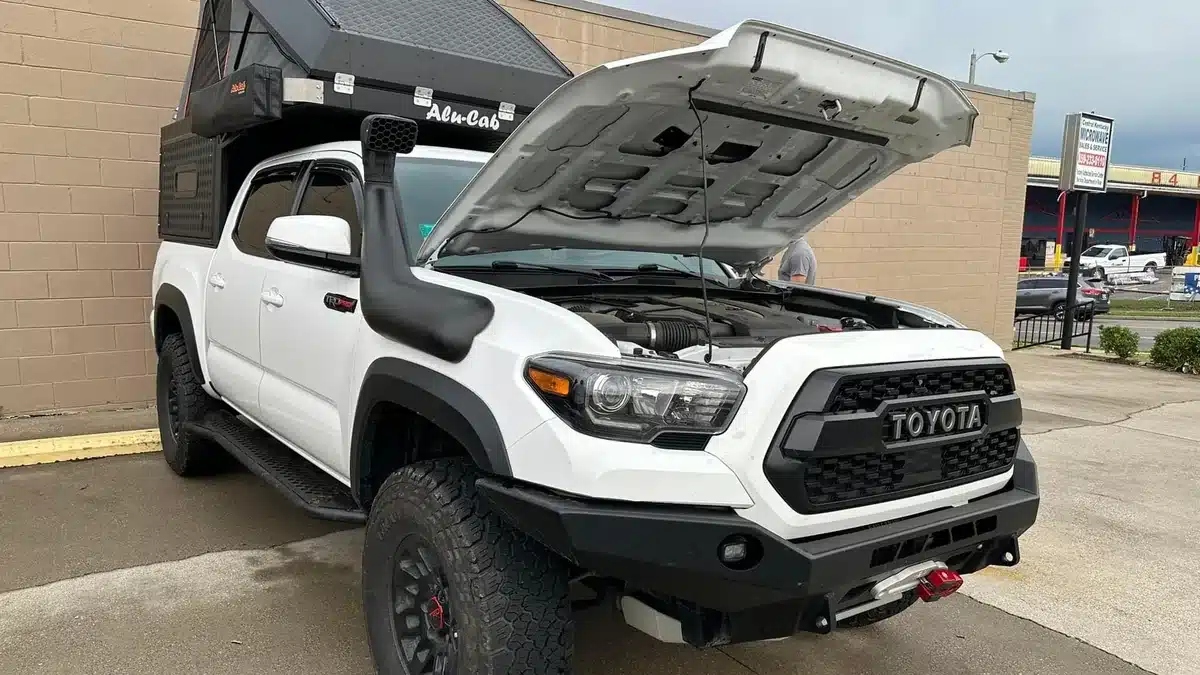
That hesitation when your Tacoma pauses before it moves, or the constant gear hunting on a hill with a trailer behind you, is not something you have to accept as “just how Toyotas drive.” Knowing how to choose Toyota tuner support starts with naming the issue you actually want fixed. A good tune should make your truck or SUV feel more responsive, more predictable, and better matched to the way you use it.
The wrong choice is usually not a bad product. It is a generic solution, a questionable remote file, or a tuner who does not understand your Toyota platform well enough to set realistic expectations. Here is what separates a worthwhile calibration from another expensive mod that does not change the driving experience the way you hoped.
Start With How You Actually Drive
A tune is not one-size-fits-all just because two vehicles share the same engine. A stock daily-driven 4Runner has different needs than a lifted Tacoma on 35s, and both have different needs than a Tundra that spends weekends towing a camper. Before comparing tuners, be honest about where the vehicle earns its keep.
If your main complaint is a lazy pedal around town, throttle response may be the priority. If the transmission constantly drops a gear and revs hard on rolling roads, transmission behavior should be at the top of the list. If you have changed tire size or axle gears, you need someone who understands how those changes affect shift strategy, load calculations, and overall drivability.
Ask yourself these questions before spending a dollar:
- Does the truck feel sluggish pulling away from a stop or merging into traffic?
- Does it hunt for gears when towing, climbing grades, or running oversized tires?
- Is this primarily a commuter, trail rig, overland build, or tow vehicle?
- Do you want sharper response, smoother power delivery, firmer shifting, or a combination of all three?
Your answer matters more than a big horsepower claim. Most Toyota and Lexus owners want the vehicle to drive like it should have from the factory: direct when you ask for power, calm when cruising, and less confused when the load or terrain changes.
How to Choose Toyota Tuner Expertise, Not Hype
Toyota and Lexus trucks are their own world. The transmission logic, throttle mapping, engine behavior, and common complaints on a Tacoma, 4Runner, Tundra, GX, or LX are not interchangeable with a domestic truck or a turbo sports car. That is why platform experience should carry serious weight.
Look for a tuner that works specifically with Toyota and Lexus trucks and SUVs, not a general shop that occasionally flashes whatever comes through the door. A specialist should be able to talk plainly about the behavior you are feeling. They should understand why a stock calibration can feel delayed, why certain transmissions hunt under load, and why tire and gear changes can expose issues that were less noticeable on a stock vehicle.
They should also ask about your exact year, model, powertrain, tire size, gear ratio, and modifications. If the conversation begins and ends with “we can add power,” keep looking. Power is only one part of the equation. On many naturally aspirated Toyota platforms, the biggest win is how quickly and consistently the vehicle responds to your right foot and how intelligently it manages gears.
Authorized product support is another confidence check. An established tuning ecosystem has documented applications, known calibration strategies, and a support structure behind it. Kentucky Truck Tuning is an authorized Overland Tailor Tuning retailer because proven Toyota-specific solutions and proper installation matter more than pushing a mystery file onto an ECU.
Know What a Tune Can and Cannot Fix
The best tuner will tell you what a calibration can improve and what still needs mechanical attention. Tuning can sharpen throttle response, revise transmission behavior, improve part-throttle drivability, and better support a vehicle running changed gearing. It can make a truck feel dramatically more willing without turning the sales pitch into fantasy.
It cannot repair worn spark plugs, a dirty mass airflow sensor, slipping transmission components, a failing fuel system, or an engine light caused by an unresolved mechanical problem. If your truck has a drivability issue that is new, severe, or accompanied by warning lights, diagnose that first. Flashing over a real problem is not tuning.
Be skeptical of anyone promising huge gains with no trade-offs, no questions, and no concern for your vehicle’s condition. A quality calibration is built around usable results. That can mean a more confident passing response, fewer unnecessary downshifts, and a truck that no longer feels like it needs a written invitation to accelerate.
Match the Tuning Method to Your Comfort Level
There are several ways tuning gets installed, and the best route depends on your location, vehicle, and how hands-on you want the process to be. An in-person appointment gives you direct access to a specialist who can verify the application, install the tune correctly, and answer questions before you leave. For owners in Central or Northern Kentucky, Southern Indiana, and the Cincinnati area, that shop-level support can be worth more than the convenience of trying to figure it out alone.
Remote options can work well for owners who are comfortable following instructions and have access to the required equipment. But convenience should not replace support. Make sure you understand what hardware is needed, whether you can return to stock if necessary, and who will help if something does not go as planned.
Also ask whether the solution supports future changes. A truck on stock tires today may be on 33s next season. If your build is evolving, choose a tuner that can advise you when a recalibration makes sense rather than treating the first flash as the end of the conversation.
Pay Attention to Transmission Tuning
For many Toyota truck and SUV owners, transmission behavior is the reason they start looking at tuning in the first place. The factory programming often favors fuel economy and conservative operation. That can create delayed shifts, soft engagement, indecisive gear changes, and that familiar cycle of downshift, upshift, downshift when the road gets hilly.
A properly matched transmission calibration can reduce unnecessary gear hunting and make shift behavior feel more intentional. That does not mean every shift should be harsh. A daily driver needs smoothness. A tow rig needs confidence under load. An off-road or overland vehicle needs predictable response when conditions are uneven and traction matters.
This is where vehicle-specific knowledge pays off. A tuner should explain the expected difference in real driving terms, not bury you in a screen full of numbers. You should know whether the result is designed to feel sharper, smoother, firmer, or more stable under load.
Consider Your Mods and Your Next Mods
Tire size, gearing, intake work, exhaust changes, and added weight all influence how a Toyota feels on the road. A steel bumper, winch, drawer system, rooftop tent, and full camping load can turn a once-light SUV into a very different machine. Bigger tires can compound the problem by effectively changing the gearing and making the drivetrain work harder.
Tell the tuner about every meaningful modification, even the ones that seem unrelated. The goal is not to impress anybody with a parts list. It is to give the calibration provider an accurate picture of what the vehicle is asking the engine and transmission to do.
Do not choose based solely on what your buddy runs. His stock-gear 4Runner with all-terrain tires may love a setup that is not right for your re-geared, armored, fully loaded trail build. Use other owners’ experiences as a starting point, then choose support tailored to your exact vehicle.
Judge the Tuner by the Questions They Ask
A capable Toyota tuner does not rush to sell you a flash. They want to know what you drive, what it does now, how it is modified, and what you want it to do better. That conversation is part of the service.
You should leave with clear expectations about compatibility, installation, driveability changes, and what to do after the tune is installed. There may be a short relearning period as the vehicle adapts, and driving style still matters. A tune can make a vehicle far more cooperative, but it will not repeal physics when you are pulling a heavy trailer up a mountain grade.
Choose the tuner who talks about your truck the way you do: as a tool, a project, and something you genuinely enjoy driving. When the calibration matches the build and the person behind it understands Toyota behavior, the first on-ramp, steep hill, or loaded trail run will tell you why the choice was worth making.