
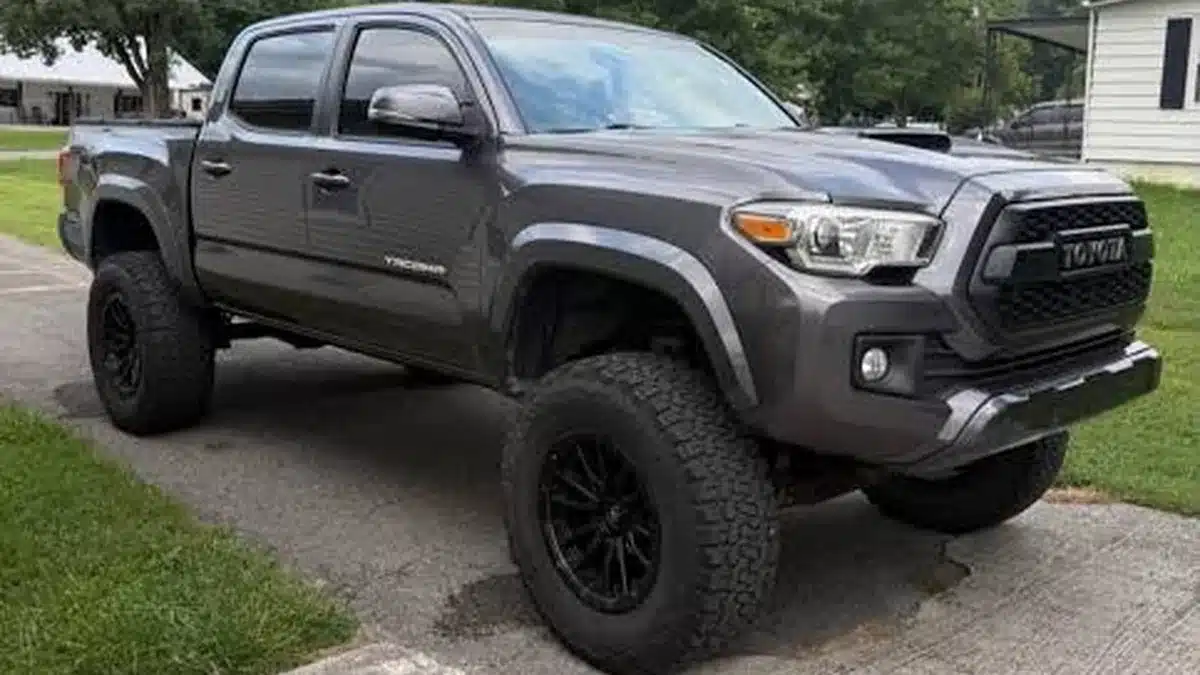
A Tacoma can feel completely different after a regear – and not always in the way the owner expected. Lower axle gears can bring back the punch lost to bigger tires, improve crawl control, and put the engine back in a useful RPM range. But if the truck is still running a stock calibration, the ECU and transmission may not be making the most of those mechanical changes.
That is the real Tacoma regear calibration versus stock conversation. Gears change what happens at the axles. Calibration changes how the truck interprets vehicle speed, throttle input, load, and transmission behavior around that new setup. One upgrade without considering the other can leave capability on the table.
What a Regear Actually Changes
A regear replaces the differential gear sets with a numerically higher ratio. Moving from a 3.91 to a 4.88 or 5.29 ratio means the driveshaft turns more times to rotate the tires once. That multiplication helps the engine apply torque to the ground more effectively.
For a Tacoma on 33s or 35s, this can be a major correction. Larger tires effectively make the final drive ratio taller. The truck may feel lazy leaving a stop, downshift more on grades, and hunt between gears when towing. The factory ratio was selected for factory tire diameter, factory weight, emissions targets, and broad-market fuel economy. Add steel bumpers, camping gear, passengers, a roof rack, and oversized tires, and the original ratio can stop feeling right.
A proper regear puts usable RPM back where the Tacoma needs it. It improves low-speed control off-road and reduces the sense that the truck is carrying a load it cannot quite get moving. On the highway, it can also reduce the constant downshift-and-upshift cycle that frustrates so many modified Tacoma owners.
But axle gears do not rewrite the truck’s control strategy. That is where calibration enters the picture.
Tacoma Regear Calibration Versus Stock: The Big Difference
A stock Tacoma calibration is built around factory assumptions. It uses programmed logic for throttle mapping, torque management, shift schedules, and load response. Some vehicle-speed calculations may also need attention after tire-size changes, depending on the Tacoma generation and the available calibration options.
With a regear, the engine gets into its power band faster and the driveline sees a different relationship between engine RPM, road speed, and throttle input. The stock transmission strategy can still operate, but it may not react in the most natural way for the truck’s new gearing, tire size, and weight.
A regear-aware calibration focuses on how the truck drives in the real world. Rather than merely making the accelerator feel touchier, the goal is to make throttle response and shift behavior fit the new mechanical setup. That can mean a more decisive response from a stop, cleaner shifts under moderate throttle, and less indecision when the road starts climbing.
The difference is especially noticeable in trucks that already had stock transmission hunting. A regear often helps by reducing the load the engine feels. A quality tune can further refine when the transmission holds a gear, when it downshifts, and how it responds to pedal input. Those are separate improvements that work better together.
Why Stock Programming Can Still Feel Off After a Regear
A regear is not a magic reset button for every stock Tacoma complaint. It solves the mechanical leverage problem. It does not automatically remove conservative throttle mapping or factory transmission behavior.
That is why some owners install 4.88s or 5.29s, take the truck for a drive, and say it is better but still not finished. They may have regained power at the tire and improved off-road control, yet still deal with a delayed pedal, an awkward part-throttle shift, or a transmission that drops gears too readily on rolling terrain.
Stock programming can also feel more noticeable after the regear because the truck now responds faster mechanically. When the throttle mapping or shift strategy lags behind that response, the mismatch is easier to feel. The Tacoma has more leverage, but the command side of the equation still behaves like it is managing a completely stock truck.
For drivers who use their Tacoma as a commuter, weekend trail rig, and tow vehicle, that mismatch gets old fast. You should not have to stab the throttle to merge, manually manage every hill, or accept a gear change every time the road rolls upward.
Where Calibration Makes the Biggest Difference
Regear calibration is not one-size-fits-all because Tacoma use is not one-size-fits-all. A lightly built daily driver on 33s has different needs than a double cab on 35s with armor, a rooftop tent, recovery gear, and a trailer behind it.
Daily Driving and Highway Grades
On-road drivers usually notice smoother throttle response and more predictable transmission behavior first. A tuned calibration can make the truck feel more connected to the pedal without turning every stoplight into a full-throttle event.
The real test is a long grade or a two-lane passing situation. With appropriate gearing and calibration, the Tacoma should build speed with less drama and hold a useful gear longer when load demands it. It may still downshift – that is normal and often necessary – but it should feel intentional instead of confused.
Towing and Loaded Travel
Towing exposes every weak point in a poorly matched setup. Bigger tires, added weight, wind resistance, and hills can make a stock-geared Tacoma work hard. A regear helps restore torque multiplication, while calibration can improve the way the transmission responds before the truck gets bogged down.
The right setup does not promise that a Tacoma will tow like a heavy-duty diesel. It makes the truck behave more confidently within its ratings. Temperature management, trailer weight, payload, and driving conditions still matter. A tune is not permission to overload the truck.
Off-Road and Overland Use
On the trail, lower gears help with controlled climbs, descents, and technical obstacles. The engine can stay in a more useful range at lower vehicle speed, which reduces the need for excessive throttle. That matters when traction is limited and momentum is not your friend.
Calibration improves the driver’s control over that capability. A smoother, more predictable pedal is valuable when you are picking through rocks or easing up a washed-out climb. The goal is not a jumpy throttle. It is a truck that responds when asked and settles when you lift.
Speedometer Accuracy Is a Separate Question
Owners often group tire size, gears, and speedometer correction into one conversation, but they are not the same adjustment. Axle gears affect engine RPM relative to driveshaft speed. Tire diameter affects how far the truck travels per tire revolution, which is what creates an inaccurate speedometer and odometer after moving to larger tires.
If your Tacoma has oversized tires, verify speed with a GPS-based reading rather than guessing. A speedometer that reads low can affect more than your sense of speed. It can influence mileage tracking and, on some platforms, how vehicle-speed-dependent systems behave.
Whether speedometer correction is available and appropriate depends on the exact Tacoma year, ECU strategy, tire size, and tuning solution. A competent Toyota-specific tuner will look at the complete build rather than treating every truck with 33s as identical.
Choosing the Right Ratio Before You Tune
Calibration cannot rescue a poor gear-ratio choice. Before selecting a tune, be honest about tire size, curb weight, trailer use, terrain, and highway habits. A Tacoma that sees mostly flat interstate miles may not need the same ratio as one that regularly crosses Appalachian grades loaded for a week off-grid.
4.88s are a common fit for many Tacomas on 33-inch tires, while 5.29s often make sense for heavier 35-inch builds. Those are starting points, not automatic answers. Actual tire diameter, transmission type, engine, and how you use the truck all matter.
Do not choose solely by cruising RPM. Owners sometimes chase the lowest possible highway RPM, then wonder why the truck feels dead at lower speeds and constantly downshifts under load. A well-matched ratio keeps the engine in a productive range. It is better to have a truck that pulls cleanly than one that looks good on a single RPM number at 70 mph.
Make the Truck Drive Like the Build Looks
A regear is a serious upgrade. It deserves more than a quick test drive and the hope that the factory programming will sort itself out. When the mechanical setup, tire size, vehicle weight, and calibration are considered together, the Tacoma stops feeling like a modified truck that is fighting its own software.
Kentucky Truck Tuning works with Toyota-specific calibration because the details matter. Bring the real build sheet – tire size, gear ratio, added weight, towing plans, and how you actually drive it. The best result is not the loudest claim. It is a Tacoma that pulls out cleanly, shifts with purpose, and feels ready for the next highway grade or trailhead.