
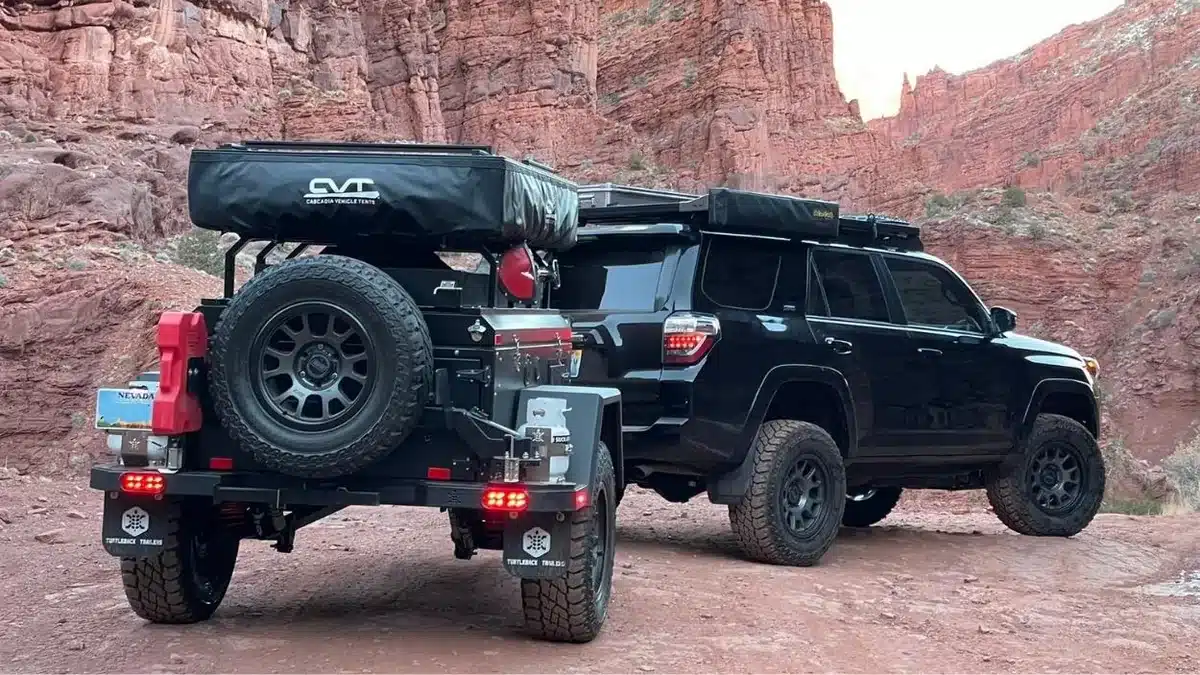
A loaded 4Runner exposes every part of the factory calibration that feels fine on an empty commute. The throttle can feel lazy when you need to merge, the transmission may grab another gear halfway up a grade, and holding a steady speed can turn into a constant pedal-and-shifter negotiation. Real 4Runner towing tune results are not about turning a naturally aspirated V6 into a diesel. They are about making the power and gears your truck already has work with more purpose.
For owners pulling campers, utility trailers, boats, and overland trailers, that difference shows up in the driver’s seat. A well-matched tune can make the truck feel less indecisive under load, especially in the rolling terrain that makes a stock 4Runner hunt between gears.
What 4Runner towing tune results feel like
The first thing most drivers notice is throttle response. Factory throttle mapping often asks for more pedal travel than the situation deserves. When you are pulling out into traffic with a trailer behind you, that delay feels worse than it does when the cargo area is empty. A towing-focused calibration makes pedal input more direct and predictable, so the truck responds sooner without requiring you to bury the accelerator.
That does not mean the 4Runner becomes jumpy or hard to control. A good tune should make light-throttle driving cleaner too. The goal is a more natural relationship between your right foot and the engine, whether you are easing through a campground or accelerating onto the interstate.
Transmission behavior is usually the bigger win. The 5-speed automatic in many 4Runners is durable, but its stock programming can favor fuel economy and low-RPM cruising even when a trailer changes the equation. That can lead to gear hunting: a downshift on a hill, an upshift when the grade eases for a second, then another downshift as the truck loses speed.
A calibrated transmission strategy can hold an appropriate gear with more confidence, downshift more deliberately, and avoid unnecessary shift cycles. Instead of feeling like the truck is always reconsidering its decision, it stays in the part of the powerband where it can actually carry the load.
Why reduced gear hunting matters when towing
Gear hunting is more than an annoyance. Every unnecessary shift interrupts power delivery and makes the trailer feel less settled behind the vehicle. It also leaves the driver constantly adjusting throttle position, cruise control, or manual shift selection just to maintain a reasonable pace.
On a long climb, a better tune can keep the transmission from rushing into an overdrive gear that the engine cannot hold. On rolling roads, it can reduce the back-and-forth shifting that makes towing feel busy. You may still need to select a lower gear manually on a steep grade, and that is normal. The tune does not replace smart towing habits. It gives the transmission a better baseline to work from.
This is particularly valuable for 4Runners with larger tires or changed axle gears. Bigger tires effectively make the final drive ratio taller, which can exaggerate sluggish response and indecisive shifts. A calibration built around the vehicle’s actual setup can help restore a more usable shift pattern instead of treating a modified truck like it is still on factory-size tires.
What a towing tune can and cannot change
A tune improves how the drivetrain uses available power. It does not rewrite the mechanical limits of the platform.
A 4Runner’s towing capacity, payload rating, hitch rating, tire load rating, brake condition, and trailer setup still matter. If the truck is overloaded or the trailer has too much tongue weight, no calibration will make that safe. The same goes for sway, poor trailer brakes, cooling problems, or a weight-distribution hitch that is not adjusted correctly.
Expect a better-driving truck, not a miracle. On a heavy pull, the V6 will still rev. That is where it makes power, and letting it run at a controlled higher RPM in the right gear is often better than lugging it in too tall a gear. Drivers sometimes mistake engine RPM for strain. In reality, repeated hunting and wide-open-throttle operation in the wrong gear can be more frustrating than a steady, intentional pull at higher RPM.
Fuel economy also deserves an honest answer: it depends. Some owners see more consistent mileage because the transmission spends less time shifting and the throttle needs less input. Others use the improved response more aggressively and see no change. Trailer weight, speed, wind, terrain, tire size, and driving style will always have more influence than a tune alone.
The best towing gains happen before the trailer moves
Tuning works best when the rest of the towing setup is squared away. Before judging your results, verify trailer weight with the truck loaded as it will actually travel. That includes passengers, cargo, recovery gear, coolers, fuel, and the gear stored in the trailer.
Check tongue weight, tire pressures, trailer brake adjustment, and hitch hardware. If your 4Runner is lifted, make sure the trailer sits level enough for stable towing. A transmission tune can reduce the frustration of a poorly matched gear ratio, but it cannot compensate for a trailer that is nose-high, overloaded, or poorly balanced.
It also helps to set realistic expectations based on what you tow. A lightweight utility trailer on mostly flat roads may reveal the biggest improvement in response and smoother shifting. A taller travel trailer in hilly country will still challenge the 4Runner, but the improvement is often felt as better control: fewer surprise shifts, cleaner acceleration, and less driver workload.
Is a 4Runner towing tune worth it?
If you tow a few times a year on flat ground, the stock calibration may be tolerable. If you tow regularly, run larger tires, travel through hills, or are simply tired of the transmission making decisions that do not match the load, the value is easier to feel.
The right calibration is not a generic “more power” file. It should account for the Toyota platform, transmission behavior, tire size, gearing, and how the truck is used. That is why platform-specific tuning matters. An authorized Overland Tailor Tuning retailer such as Kentucky Truck Tuning can help 4Runner owners target the drivability problems they actually experience instead of chasing a vague horsepower number.
How to judge your own results
Use the same stretch of road and similar trailer load before and after tuning if you want a useful comparison. Pay attention to the number of shifts on a familiar hill, how much pedal it takes to merge, whether cruise control holds speed more calmly, and whether you are reaching for manual gear control as often.
The best result is not necessarily a truck that never downshifts. It is a truck that downshifts when it should, holds the gear when it needs to, and responds without hesitation when traffic or terrain demands more. That kind of control makes towing less tiring, which matters just as much on the drive home as it does on the first climb out of town.
A tune will not lighten the trailer, flatten the hills, or replace proper towing setup. What it can do is make your 4Runner feel like it finally understands the job you asked it to do.