
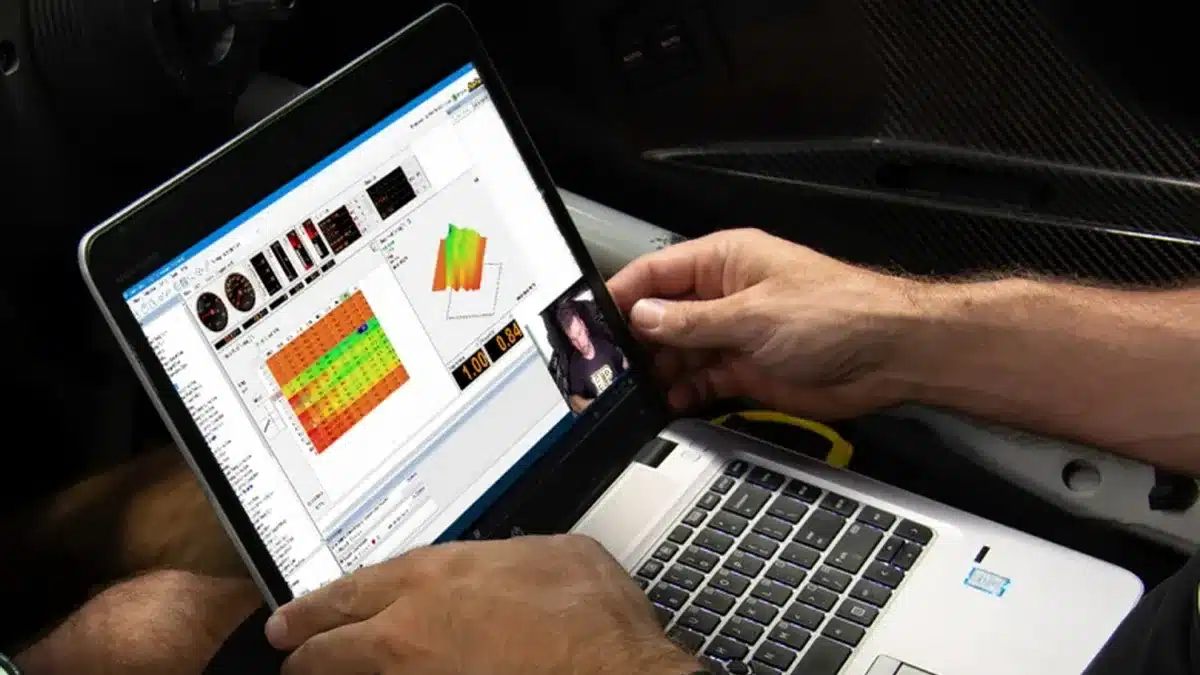
A Toyota truck can be dependable as a hammer and still feel flat when you put your foot into it. The throttle lag, delayed downshifts, gear hunting, and soft response are familiar complaints from Tacoma, 4Runner, Tundra, GX, and FJ owners. Hybrid tuning is built to fix that real-world frustration without turning your truck or SUV into something unpleasant to drive every day.
This is not about chasing a dyno number you will never feel. It is about making the truck respond the way it should when you merge onto the highway, pull a trailer, climb a grade, crawl a trail, or carry a weekend’s worth of gear.
What Is Hybrid Tuning?
Hybrid tuning is a practical approach to calibration that balances engine behavior and transmission behavior instead of focusing on only one part of the driving experience. On Toyota and Lexus platforms, the factory engine and transmission calibrations are designed to cover a massive range of drivers, climates, fuel quality, payloads, and ownership habits. That broad factory strategy leaves plenty of room for sharper, more confident drivability.
A well-built hybrid tune works with the way you actually use the vehicle. It can refine throttle sensitivity so pedal input feels more direct, adjust shift behavior to reduce the constant searching between gears, and improve how the engine and transmission work together under load.
That last part matters. A more aggressive throttle map by itself can make a vehicle feel quicker for a few minutes, but it does not automatically solve delayed shifts or hunting on hills. A transmission-focused calibration can improve shifting, but the truck may still feel lazy leaving a stop. Hybrid tuning addresses the whole driving feel.
For a daily-driven 4Runner, that can mean less pedal travel before the vehicle responds. For a Tacoma with larger tires, it can mean less indecision when the transmission is asked to hold a gear. For a Tundra that tows, it can mean more predictable downshifts and fewer moments where the truck seems unsure of what gear it wants.
Why Stock Toyota and Lexus Calibration Can Feel Off
Toyota and Lexus trucks and SUVs have earned their reputation for durability. But reliability and engaging calibration are not the same thing. Factory programming often prioritizes soft throttle input, conservative shift scheduling, emissions compliance, fuel economy targets, and a smooth experience for the average driver.
That approach makes sense for a vehicle sold to everyone. It is less satisfying for an owner who knows their truck, runs all-terrain tires, hauls tools, tows a camper, or spends weekends in the woods.
The common symptoms are easy to recognize: you press the accelerator and wait for the vehicle to react; the transmission upshifts too early, then downshifts when the road rises; or the truck repeatedly shifts back and forth while towing. None of these issues necessarily mean something is mechanically wrong. Often, they are characteristics of the stock calibration.
Tire and gear changes can make those characteristics more obvious. Larger, heavier tires change the load the drivetrain sees and can exaggerate sluggish acceleration or gear hunting. Re-gearing can improve mechanical leverage, but it also changes how the vehicle needs to manage speed, throttle, and shifting. Calibration should match the combination, not ignore it.
What You Feel Behind the Wheel
The best measure of a tune is not a flashy claim. It is the first normal drive afterward.
Throttle response should feel cleaner and more predictable. That does not mean the truck becomes jumpy or difficult to modulate. A good calibration gives you a more useful connection between your right foot and the vehicle. Light pedal input should get the truck moving with less hesitation, while deeper input should deliver power without the strange delay many owners notice in stock form.
Transmission behavior is where many Toyota and Lexus owners feel the biggest difference. Instead of rushing for the tallest possible gear and then immediately reconsidering, the transmission can hold gears with more purpose. On rolling roads, that means fewer unnecessary shifts. When you need acceleration, it means the downshift arrives with less debate.
Under load, the improvement can be even more valuable. Towing and climbing are not the places to tolerate gear hunting. The goal is not to force a truck to stay in one gear no matter what. That can create unnecessary heat and make the engine work harder than it should. The goal is smarter behavior: fewer useless shifts, a more stable pull, and a drivetrain that feels prepared rather than confused.
Off-road drivers benefit differently. Smooth, controllable throttle matters more than a dramatic initial hit. Technical terrain, loose climbs, and slow-speed maneuvering demand precision. A tune that is too aggressive can make traction harder to manage. The right setup is responsive without being touchy.
It Is Not a One-Size-Fits-All Upgrade
A commuter-driven stock GX does not need the exact same calibration approach as a Tacoma on 35-inch tires with aftermarket gears. A Tundra used for a landscaping trailer has different demands than a 4Runner built for long overland trips.
That is why the conversation before tuning matters. Tire size, gear ratio, towing use, fuel preference, typical terrain, and how you want the pedal to feel all affect the right direction. More aggressive is not always better. For plenty of owners, the best result is a truck that simply feels factory-like in smoothness, except more alert and far less frustrating.
There are trade-offs. Sharper throttle response can make the vehicle feel more eager, but drivers who prefer an ultra-soft initial pedal may want a milder setting. Firmer, more deliberate shift behavior can reduce hunting, but a driver who values the gentlest possible shift at all times may prefer a conservative calibration. Good tuning is not about imposing one personality on every vehicle. It is about matching the calibration to the owner and the build.
Who Gets the Most From Hybrid Tuning?
Hybrid tuning makes the most sense for owners who are tired of adapting their driving style to the factory programming. If you find yourself pressing deeper into the pedal than you should need to, manually selecting gears to stop hunting, or bracing for a delayed downshift before a pass, you are exactly the type of driver who notices the difference.
It is especially useful for Toyota and Lexus owners with modifications that alter how the vehicle drives. Larger tires, added weight from armor or camping gear, different axle gears, and regular towing all change the equation. The vehicle may remain fully capable, but its stock calibration was not necessarily written around your exact setup.
Even stock vehicles can benefit. A stock Tacoma or 4Runner owner who primarily commutes may want a more responsive, less irritating daily drive. A GX owner may be looking for smoother behavior with family aboard and better confidence when loaded for a trip. The purpose is not to make every vehicle feel like a race truck. It is to make it feel more sorted.
Why Platform-Specific Calibration Matters
Generic tuning promises can sound impressive, but Toyota and Lexus trucks have their own patterns, transmissions, engine strategies, and quirks. The details matter. A calibration that feels right on one platform may not be the right answer for another.
Platform-specific work also means understanding the difference between a complaint and a mechanical problem. A tune can improve calibration behavior, but it cannot repair worn components, solve ignored maintenance, or make an overloaded vehicle behave like it is empty. Honest tuning starts with a healthy vehicle and realistic expectations.
At Kentucky Truck Tuning, the focus is Toyota and Lexus truck and SUV drivability, with authorized Overland Tailor Tuning support for owners who want a proven, platform-focused solution. That specialized approach matters when your vehicle is more than transportation. It is your workhorse, trail rig, tow vehicle, and road-trip partner.
Start With How You Actually Drive
Before choosing a hybrid tune, think past the spec sheet. Consider where the truck spends its time, what it carries, what has been modified, and what bothers you most about the current driving experience. A clear answer to those questions leads to a better result than chasing the most aggressive option available.
Your Toyota or Lexus does not need to become a different vehicle. It just needs calibration that finally works as hard as the rest of the build.