
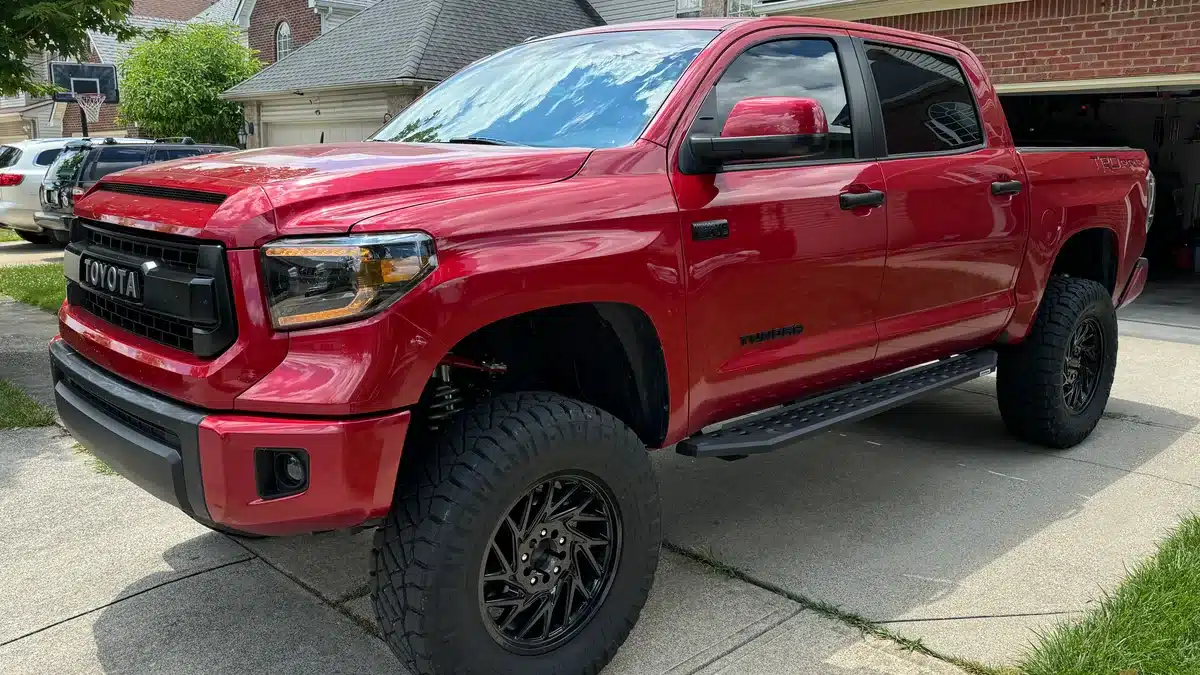
A loaded trailer exposes every weak point in a stock truck setup. Throttle lag feels worse, the transmission starts hunting, the rear end squats, and a perfectly normal hill suddenly feels a lot steeper. The best Tundra upgrades for hauling are not about building a show truck. They are about making your Tundra calmer, more predictable, and easier to control with real weight behind it.
Start by being honest about what you haul. A 16-foot utility trailer with a side-by-side needs a different plan than a loaded equipment trailer, enclosed race trailer, camper, or horse trailer. Your Tundra’s year, engine, axle ratio, cab configuration, payload sticker, trailer weight, tongue weight, and cargo in the bed all matter. No bolt-on part changes Toyota’s published tow rating or payload rating, but the right upgrades can make towing within those limits feel dramatically better.
Start With the Tundra’s Weakest Link
There is no single best modification for every towing setup. If your truck feels loose or planted poorly with a trailer attached, suspension and weight distribution should come first. If it feels lazy pulling grades or constantly shifts between gears, drivability tuning may deliver the biggest difference. If stopping feels sketchy after larger tires or regular heavy loads, brakes move to the front of the line.
The smart approach is to fix the complaint you actually feel instead of buying parts because they look good online. Hauling is a system: truck, trailer, hitch setup, tires, brakes, suspension, gearing, and calibration all work together. One weak link can make an otherwise capable Tundra feel like it is working far harder than it should.
Transmission and Throttle Tuning for a More Controlled Pull
For many Tundra owners, the factory calibration is the first thing that becomes irritating under load. Pedal input can feel delayed, low-speed throttle response may be soft, and the transmission may upshift early or hunt for the right gear when terrain changes. That behavior is frustrating when you are trying to hold a steady pace with a trailer.
A Toyota-specific engine and transmission calibration can sharpen pedal response and improve how the truck applies power. More importantly for hauling, it can reduce unnecessary gear hunting and create more consistent shift behavior. You are not looking for a wild, high-strung tune while pulling a trailer. You want the truck to respond when you ask, settle into a gear, and stop making every moderate grade feel like a debate with the transmission.
This is especially valuable on modified Tundras. Larger tires effectively change the final drive ratio, which can make the truck feel slower off the line and alter shift behavior. A calibration built around your specific tire size and use case can restore more natural drivability. Kentucky Truck Tuning focuses on Toyota and Lexus-specific calibration work, including OTT solutions, because generic tuning is not the answer for a truck that has to work under load.
A tune does not replace proper gearing, cooling, brakes, or weight management. If you routinely tow at the top of your truck’s capacity through mountains, do not expect software alone to solve every issue. But for the driver tired of factory throttle lag and wandering transmission logic, it can be one of the most noticeable upgrades you can make.
Suspension Upgrades That Keep the Truck Level
Rear squat is more than an appearance problem. Excessive squat can reduce front-end steering feel, change headlight aim, upset trailer balance, and make the truck feel less confident over dips, bumps, and crosswinds. The right rear suspension support helps the Tundra maintain a more level stance when tongue weight is applied.
Airbags are a popular option because they are adjustable. They work well for owners who tow different trailers or carry variable loads, as long as they are set up correctly and inflated evenly. Airbags are not a reason to overload the truck. Their job is to support a legal, properly loaded setup, not create payload that does not exist.
Progressive-rate rear springs or helper springs can be a better fit for an owner who carries weight more consistently. They can provide more predictable support without requiring air pressure adjustments before every trip. The trade-off is that some spring setups can ride firmer unloaded, so choose based on how often the truck is actually hauling.
Quality shocks deserve attention too. Stock shocks that are tired or underdamped can let the truck bounce and wallow once the trailer is connected. Better shocks improve control over rough pavement, bridge joints, and uneven back roads. They will not increase capacity, but they can make a loaded Tundra feel far less busy.
Use the Right Hitch and Weight Distribution Setup
A good hitch setup is one of the most overlooked Tundra hauling upgrades because it is not flashy. It is also one of the most important. Match the hitch ball, ball mount, receiver rating, coupler, safety chains, and breakaway system to the trailer you are pulling. Then verify that the trailer sits level when loaded.
For heavier bumper-pull trailers, a properly adjusted weight-distribution hitch can make a major difference. It helps transfer some load back toward the front axle and trailer axles, improving steering response and stability. Sway control can add another layer of confidence, particularly with enclosed trailers, tall campers, or trailers that see interstate speeds and wind.
Do not set hitch height based on an empty trailer in the driveway. Load the trailer as you would for a real trip, including cargo, fuel, tools, and gear. Tongue weight changes when the load changes. A setup that looks fine empty can tow poorly once the trailer is packed.
Tires and Brakes Are Confidence Upgrades
Big all-terrain tires may look right on a Tundra, but they can add weight, soften acceleration, affect braking, and reduce stability if the tire choice is wrong for the job. For regular hauling, choose tires with an appropriate load rating, healthy tread, and a pressure range that supports the actual weight on the truck. Check pressure cold and use the tire placard and tire manufacturer guidance as your baseline.
If your Tundra has oversized tires, stock brakes may feel more strained. Fresh pads, quality rotors, and properly serviced brake fluid are a strong first move. If you tow frequently in hilly country or run larger, heavier tires, upgraded brake components can offer better heat management and a firmer, more consistent pedal.
The trailer brakes matter just as much. A proportional brake controller, correctly adjusted trailer brakes, and a tested breakaway battery should be non-negotiable for trailers equipped with electric brakes. Before chasing performance parts, make sure the trailer stops straight and the controller is calibrated for the load.
Cooling, Gearing, and the Heavy-Duty Reality Check
Heat is what turns a long pull into an expensive problem. Keep the cooling system maintained, inspect hoses and belts, and make sure the engine oil and transmission fluid are serviced on schedule. If you tow hard in hot weather, through elevation, or with a heavily loaded trailer, watch temperatures and give the truck room to manage heat rather than holding wide-open throttle for miles.
Re-gearing is worth considering for Tundras on substantially larger tires that tow often. A properly selected gear ratio can bring back low-speed torque multiplication and reduce transmission indecision. It is a bigger investment than a tune or suspension support, and it should be planned carefully. For a lightly modified daily driver that only tows occasionally, it may not make financial sense. For a truck on 35-inch tires that regularly works, it can change the entire towing experience.
Also check the unglamorous stuff: wheel bearings, trailer bearings, suspension bushings, driveshaft components, battery condition, wiring connections, and trailer lights. A truck that pulls smoothly is built on maintenance first, then upgrades.
Build the Tundra Around Your Actual Trailer
The best setup is the one that matches your work, not somebody else’s parts list. A stock-size-tire Tundra towing a utility trailer may need nothing more than a dialed hitch, good tires, brake maintenance, and better calibration. A lifted truck on larger tires pulling an enclosed trailer may benefit from tuned shift logic, rear support, shocks, brake upgrades, and eventually gears.
Get the truck and trailer weighed when loaded for a typical trip. That one step gives you real numbers for axle weight, tongue weight, payload, and trailer balance. Once you know what the truck is carrying, every upgrade decision gets easier – and every mile with a trailer behind your Tundra gets a little less dramatic.
When the truck holds a gear, stays level, brakes straight, and responds cleanly to your right foot, hauling stops feeling like a compromise. It starts feeling like what the Tundra was built to do.